Spatial computing for sports science

Your sports‑science lab.
In one headset.

Reaction, hand‑eye, eye‑movement, balance, memory and concussion‑workflow testing for your whole squad. Run from an iPad, on the headset you choose, and tracked against each athlete's own baseline.

  • Built at NUS
  • Co‑designed with clinicians from KKH & NUH
  • BLOCK71 incubated

The cost of guessing

£45m

Estimated cost of injuries to a Premier League club each season, in wages and lost performance.1

#1

Concussion's rank among match injuries in English Premiership rugby, twelve seasons running.2

Day 7

When the standard sideline concussion test stops being useful. Most protocols keep players out for 12 to 21 days.3

39.5%

Children seen at KKH after concussion who still had symptoms more than four weeks later.4

Match day, away from home

A player takes a knock. The physio reaches for a clipboard.

  1. Today. The gold-standard sideline check is a paper form that relies on memory and self-report. No sensor data, nothing to compare against.
  2. The kit that would help lives in a lab: light boards, force plates and eye trackers, each tens of thousands of dollars and none of them portable.
  3. HARP folds it into one headset that fits in the physio's bag, with every result logged against the athlete's own pre-season baseline.

Equipment prices are typical list prices and vary by vendor.

How it works

Perform. Protect. Return.

One headset covers the three jobs a performance and medical team does every season.

01 · Perform

Train the eyes and hands that win games

Reaction, catch and tracking drills your athletes actually enjoy. Perceptual training with 3D stimuli carries over to the field far better than screen-based drills.5

Reaction TimeFalling Ball CatchSmooth Pursuit

02 · Protect

Baseline every athlete before the season

A pre-season baseline gives every later check something to compare against, and gives your medical staff a quick, objective sideline check when a knock happens.

Digital SCATBalanceSaccades

03 · Return

Track recovery back to baseline

Repeat the same tests through the stand-down period and hand your doctor a back-to-baseline report before they sign the athlete off.

All modulesRecovery trendsSession report

Return to play

Built around your protocol.

The sideline test is weakest exactly when the big decisions happen. HARP gives your medical team objective data at every step of the stand-down. The decision stays with them.

Day 9: a retest against baseline in the physio room
Protocol
Protocol
Sideline test value
HARP

Swipe sideways to see the full timeline

Protocol summaries are simplified from World Rugby (2022), The FA (2023), AFL (2024), NRL (2023), NFL (2022) and Sport Singapore (2025) guidance. Always follow your governing body's current protocol.6

The modules

Pick a test. Watch it run.

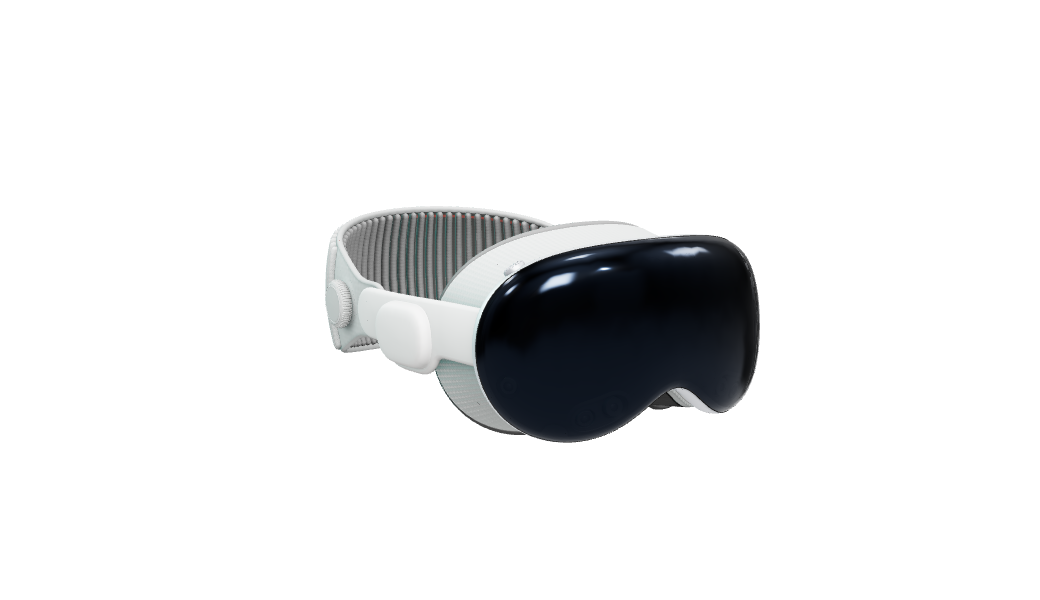
Every module runs inside the headset while the clinician drives it from an iPad. Switch between a live simulation, the real capture from Apple Vision Pro, and the data it produces.

Simulation

What it measures

Why it matters on the pitch

Runs on

Evidence

The coach's iPad

Tap the iPad. The headset changes.

Clinicians asked for control without touching the headset, so the whole session runs from an iPad: launch a module, set the speed, lanes and colours, and watch results land in the athlete's profile as they happen.

  • Launch any module to the headset in one tap
  • Live controls: lanes, colours, speed, drop timing
  • Recovery trends against each athlete's baseline
  • Auto-generated session report
Real capture The current iPad app
Reaction TimeRunning
Headset view · real capture
Lane
LCR
Speed
Colour
Recovery trend vs baselinesample

The report

What your doctor actually sees.

Every session ends in a one-page report: today's results against the athlete's own baseline, module by module, with a plain summary at the top.

  1. Baseline vs today Every metric sits next to the athlete's pre-season value.
  2. Change, not just scores Results outside the athlete's normal range are flagged in amber.
  3. Plain summary "Back to baseline" or "Not yet", written for the medical team.
  4. Trend The recovery curve since the knock, test by test.
Get the sample report
HARP session reportJordan Lim · Midfield · Day 9 after knock
Sample
1Not yet at baseline2 of 6 measures outside normal range3
MeasureBaselineTodayChange
Reaction time214 ms221 ms+3%
Catch rate88%86%−2 pts
Saccade accuracy95%89%−6 pts 2
Pursuit focus breaks02+2
Sway area, tandem5.0 cm²5.4 cm²+8%
Symptom severity23+1
Saccade accuracy since knock 4

Supports clinical judgement. Does not diagnose or clear athletes to play.

Squad view

Every athlete baselined. Every change flagged.

Baseline the squad in pre-season. After that, every knock, slump or return-to-training check has something to compare against, and any change from baseline goes to your medical staff.

Baselined24/24
Season week9
Tests this week61
Flagged for review1
Sample data

Baseline Day maths

A squad of 30 in one session

A short core battery and three headsets running side by side turn a full squad baseline into an afternoon, not a week.

~10minute core battery
3headsets in parallel
~100minutes for 30 athletes

Planning figures. We confirm exact timings for your squad and module choice before your Baseline Day.

For clubs

Built for the sports that take hits.

Each sport leans on different tests. Here's where HARP earns its place in the kit bag.

Devices

One protocol. Every headset.

Headsets come and go, so HARP doesn't depend on one. It shipped on Apple Vision Pro and has been rebuilt for Meta Quest and Android XR. Galaxy XR is our clinic and research edition: it exposes eye tracking to apps and can be managed by hospital IT like a phone.

  • Your baselines carry over when you change headsets
  • Per-headset timing calibration, so scores compare across devices (in development)
  • Managed-device support for clinics on Galaxy XR
ModuleVision ProMeta Quest 3Galaxy XR

available   rolling out   head-and-target version (no gaze data)

Our commitments

Your athletes' data stays yours.

What every founding partner gets from us in writing.

Data ownership

Your club owns its athletes' data. You can export all of it at any time, and we delete it on request.

Privacy by role

Coaches see performance results; medical results stay with medical staff. Parental consent for under-18s.

Protected and local

Encrypted in transit and at rest, hosted in Singapore, and handled under the PDPA.

Hygiene

A disposable face cover for every athlete, and lenses and straps cleaned between sessions.

Comfort first

A short comfort check before each session. Any test stops the moment it provokes symptoms, and the stop is recorded.

Fits your stack

CSV and JSON export today. Connectors for athlete management systems are on the roadmap.

CSV / JSONSmartabaseKitman LabsTeamworks

Evidence

What we know, and what we're testing.

Every HARP module is built on a published assessment method and was shaped with clinicians. Validating HARP's own measurements is the work now under way, and we label each stage honestly.

We will publish reliability and validity results, including results that don't flatter us.

  1. Complete
    Clinical co-design

    7 clinicians at KKH and NUH, 24+ hours of hands-on iteration on every module.

  2. Complete
    Low-power sensing simulation study

    16 simulation experiments for always-on wearable sensing, and an invention disclosure.

  3. In preparation
    Sports-club study at NUS

    Reliability of HARP measures in university athletes, for publication.

  4. In preparation
    Clinical study at KKH

    Proposal through the hospital's innovation and ethics pathway.

  5. Planned
    HARP Norms

    Reference ranges by age, sex and sport, built with founding partners, including Asian and youth populations.

What we're building next

Where HARP is heading.

These are concepts on our roadmap, shaped with clinicians and partners. Founding partners help decide what ships first.

Smart-mouthguard alert to headset check

Instrumented mouthguards already trigger head-injury assessments in elite rugby. Next: the alert lands on the physio's iPad and HARP runs a three-minute check on the sideline.

Straight into your athlete management system

Results flow into the platform your staff already use, alongside GPS and force-plate data, with no copying between systems.

Built for women's sport

Women's concussions can take more than twice as long to recover from, and female athletes are under-studied. Baselines and norms built for women's squads.7

Youth baseline programmes

Hospital-backed baselines for school athletes, so every young player has a reference point before a knock happens.

Two-minute readiness check

A daily cognitive readiness score that sits beside training load, so fatigue shows up before it costs a match.

Always-on sensing

Our research into ultra-low-power, on-device sensing for wearables that keep each athlete's baseline without the cloud.

Read about the research →

Built with clinicians

10+Modules
7Clinicians in co‑design
24+Hours of clinical iteration
3Headset platforms
  • Built at NUS
  • Co‑designed with clinicians from KKH & NUH
  • KKH–SingHealth Duke‑NUS innovation initiative
  • BLOCK71 incubated

HARP started with a co-founder's knee dislocation and a rehab plan nobody could stick to. We wanted testing and training that is measurable, engaging, and portable enough to leave the clinic.

Beat the squad

How fast are your hands?

A 20-second taste of the Reaction Time module. Hit each light as it appears. Tap, click, or use the J K L keys for the three lanes.

A browser can't measure what a headset can. This is a game, not an assessment.

Founding partners · 2026–27 season

Become a founding club.

We're taking on five founding clubs and two clinical sites. It starts with a Baseline Day: we bring the headsets and the iPad, baseline your squad, and send you a squad report.

You get

  • A Baseline Day for your squad
  • A season licence and support
  • A say in what we build next
  • Co-authorship on published results
  • Founding pricing, locked in

You give

  • Data-sharing agreement (de-identified)
  • Two feedback sessions a season
  • A reference, if it works for you
A Baseline Day at your training ground

Request: Founding club · Baseline Day

We use these details only to arrange your Baseline Day.

Research partners

Run a study with us.

For university labs, hospitals and sports institutes. Use HARP's modules as ready-made instruments, or design new tasks with our team.

Start a conversation
  • Raw data, not just scoresPer-trial and per-frame exports in CSV and JSON for your own analysis.
  • Tasks built to your protocolStimuli, timing, difficulty and trial order set to match your study design.
  • Eye tracking on Galaxy XRGaze data for saccade, pursuit and fixation research on a headset that exposes it to apps.
  • Clinician networkOur co-design clinicians at KKH and NUH help shape clinically meaningful tasks.
  • Co-authorshipWe work as research partners, not just a vendor.

Custom solutions

Have an idea? We'll build it.

Custom sensors, spatial-computing apps and assessment protocols, designed with you and built by our engineering team. If it needs hardware, software and a headset to work together, it's our kind of project.

Tell us what you need
Wearable sensorsVision Pro, Galaxy XR & Quest appsClinical and training simulationsMounts and rigsAssessment protocolsData pipelines and dashboardsMulti-device control

Things we've already built

Real capture

Spatial medical-imaging viewer

MRI slices scrolled and inspected at full scale in the room, on Apple Vision Pro.

Hands-free surgical rehearsal mount

A Vision Pro mount giving a fixed, microscope-style view for cochlear-implant rehearsal, developed with Sengkang General Hospital.

Wearable force and balance sensors

Custom hardware that adds ground-force data to balance tests, a pairing our clinicians flagged as highly valuable.

In development

iPad-to-headset control

Real-time session control, live parameters and auto-generated reports across Apple's ecosystem.

Ultra-low-power sensing research

Simulation work on always-on, on-device sensing for wearables, and a drafted invention disclosure.

  1. ScopeOne call to understand the problem and the setting.
  2. PrototypeA working build in weeks, on the hardware you'll use.
  3. ValidateTested with your team and, where it matters, our clinicians.
  4. DeployRolled out, supported and improved with you.

Our hardware lead was on NUS Team Bumblebee, world champions at RoboSub 2025.

For investors

A wedge into a US$7.7B market.

Concussion care is a US$7.7B market, and diagnostics are about 80% of it.8 We enter through performance testing for clubs, which is fast to sell and needs no clearance, and build the evidence for a regulated clinical product in parallel.

  1. NowWorking MVP on Vision Pro, iPad controller, 7-clinician co-design, ports to Meta Quest and Android XR.
  2. Next 6 monthsFounding clubs, a published reliability study, on-device Galaxy XR.
  3. ThenPaid club seasons, HARP Norms, and the clinical study and regulatory filing in Singapore.
  4. MoatLongitudinal baselines per athlete, normative data across Asian and youth populations, and sensing IP.